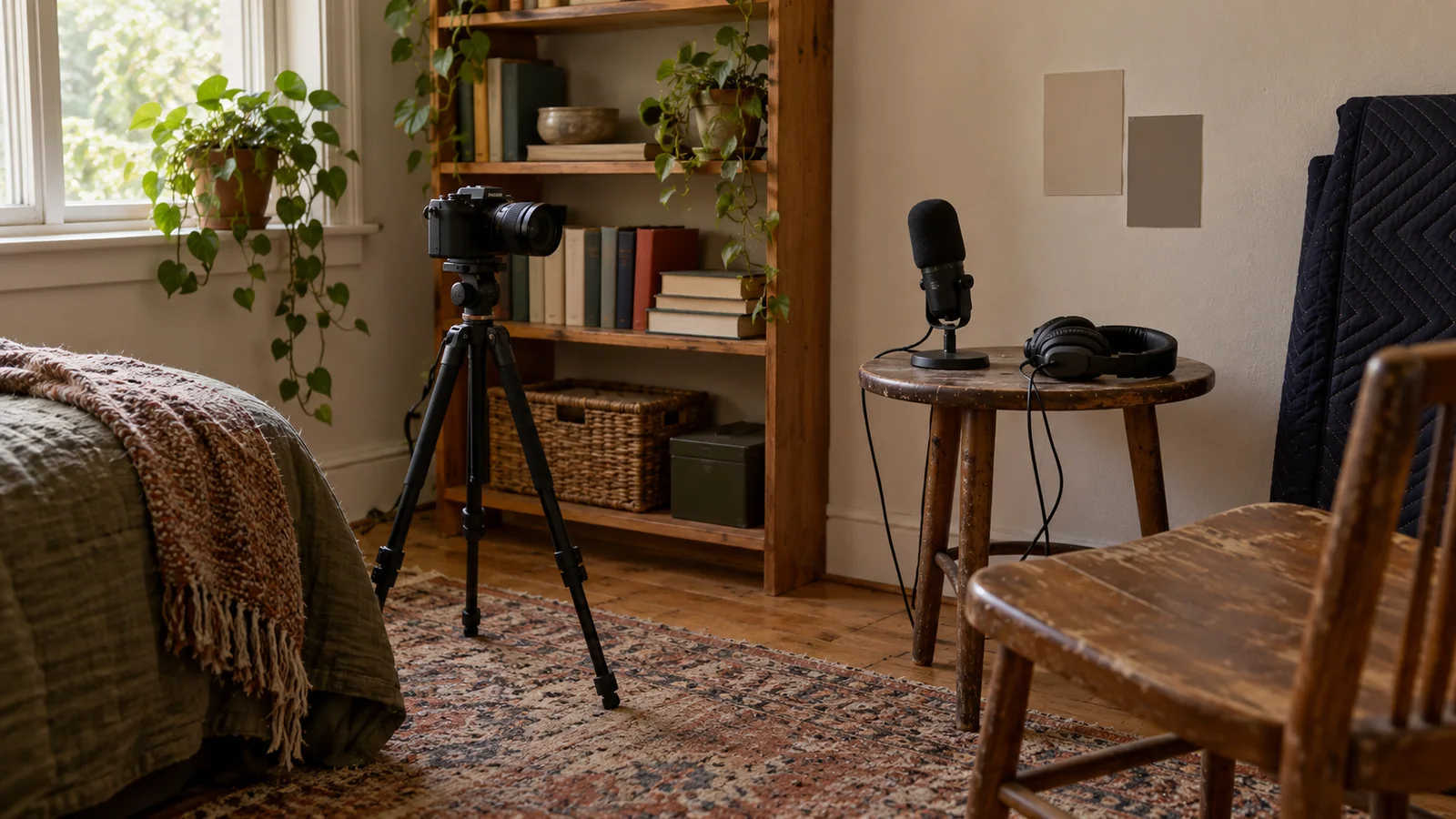
A hallway, a closed door and one unexplained sound can carry a Halloween scene. The editing problem is deciding what the viewer knows at each cut. If every shot announces danger and every sound hits at maximum intensity, there is little room for anticipation. Build one small unanswered question, give the viewer evidence to consider, and deliver a payoff that makes the earlier detail worth noticing.
This guide uses a fictional pumpkin that appears to move between shots. It needs no chase, unsafe location or convincing supernatural claim. The suggested timings are rehearsal choices, not a formula for retention. Shoot and cut two versions, then ask a first-time viewer where the story became understandable.
Write the missing information before choosing a transition
Describe the scene in three sentences: a pumpkin sits beside the door; something brushes the door from the other side; the pumpkin is now facing the camera. The unknown is who or what moved it. A closeup of an ominous decoration contributes nothing unless it helps establish that question. Remove shots that merely repeat the atmosphere.
Choose the audience promise. A playful Halloween post can end with a cat walking into view; a fictional horror short can leave the cause unresolved. The caption and opening frame should communicate fiction or staged storytelling where a real incident might otherwise be inferred. Do not turn an ordinary stranger or private home into an invented threat.
Cut a four-shot version first
| Shot | What it establishes | Editing decision |
|---|---|---|
| Wide hallway | Door and pumpkin geography | Hold until both objects can be located |
| Door detail | Source of an unexplained sound | Introduce sound before the closeup |
| Empty wide frame | Opportunity for change | Keep the camera position consistent |
| Pumpkin facing camera | The payoff | Leave time to recognize what changed |
Lay out these shots without effects. If the pumpkin was already facing the camera in the opening, the premise fails regardless of soundtrack. Match screen direction and crop before adding a color treatment. A small object can vanish when a horizontal source is reframed vertically; verify the actual delivery frame during the rough cut.
Let audio lead one cut, not every cut
Adobe documents J cuts and L cuts as split edits that offset picture and audio boundaries. For this scene, bring the door-brush sound into the end of the hallway shot, then cut to the door. The viewer has a reason to look there. Allow room tone to continue into the following wide shot so the change of angle does not sound like a different location.
Avoid using a musical hit to explain every new frame. Reserve a clear accent for the changed pumpkin, or let that moment be quieter than the buildup. Listen with the picture hidden: the track should have a beginning, a developing question and a release, without needing a sequence of loud shocks to mark each step.
Test the pause with someone who has not seen the footage
Export a plain version and a version with a slightly longer empty hallway hold. Give a viewer only one version first. Ask what they expected, what changed and whether the reveal was visible. These questions diagnose comprehension; asking whether it was scary encourages a vague preference answer.
If the pause feels empty, strengthen a clue before extending the duration. A subtle shadow or audible scrape can focus attention. If the change is missed, hold the reveal or improve framing. A faster cut is not automatically more suspenseful, and a longer cut is not automatically more cinematic.
Add Halloween atmosphere after the scene works
Compare a restrained seasonal music preview under the established cut. Choose a sound that leaves room for the door clue; do not infer fit from a spooky title alone. Keep the dry scene available so a collaborator can judge whether the music helps or hides the structure.
STIS spooky season halloween sounds
Use darkness, contrast and timing to carry tension. Avoid flashing effects as the default Halloween treatment; W3C identifies flashing content as an accessibility concern. Provide captions for meaningful speech and sound clues, such as a brush behind the door, so the premise remains available to viewers who cannot hear it.
Release the scene with its context intact
Check the first frame, changed pumpkin and last hold in the final exported file. Watch once with sound muted and once at normal listening volume. Confirm that the caption describes a staged Halloween scene, that props stay readable on a phone and that the effect does not rely on an abrupt volume spike. Archive the clean cut, final mix and shot order together. A good suspense edit makes a small change feel consequential because the audience understood the setup.
Related reading
Sources and editorial scope
Sources reviewed 3 October 2026. This original Angry Media exercise focuses on edit a halloween suspense scene without cheap jump scares. The examples illustrate production decisions, rather than measured results.